Get Connected
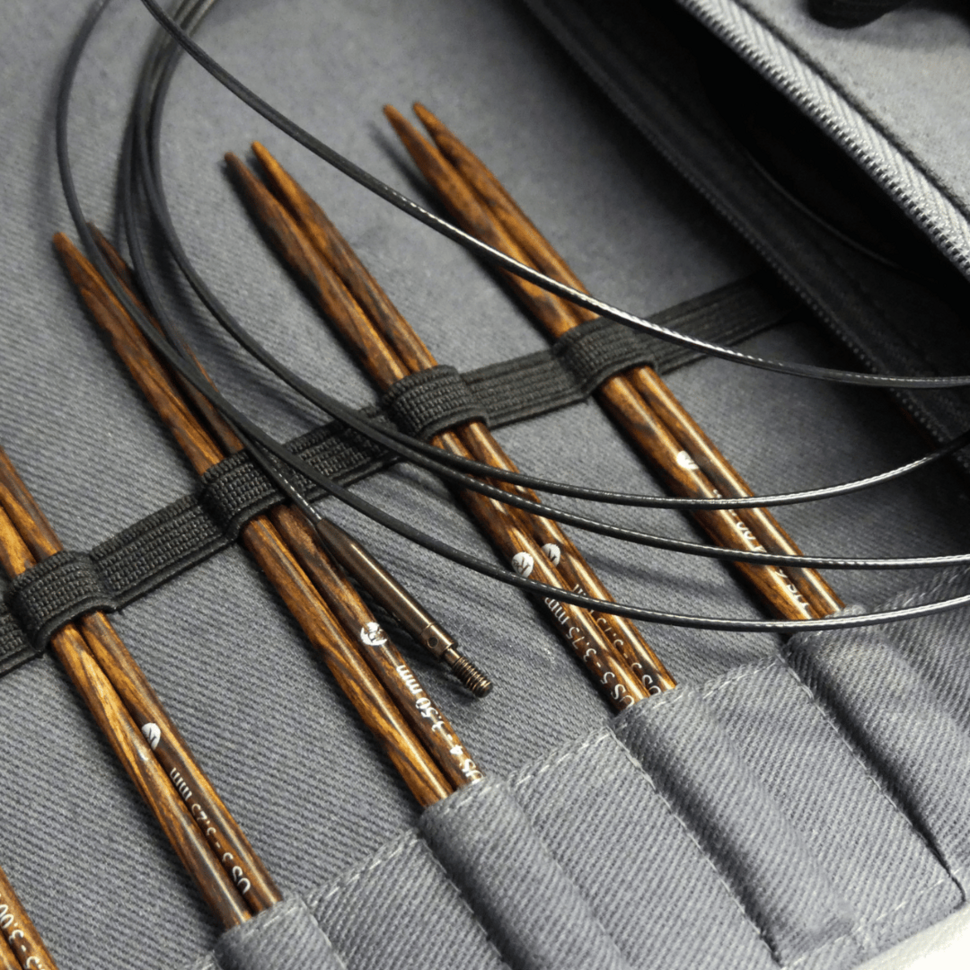
Not Your Grandmother's Knitting Needles
Workmanship and quality construction often feel like relics of the past. As the saying goes, “They just don’t make it like they used to.” And while that may be true for many products, knitting needles are a surprising exception. In fact, the evolution of needle technology over the past couple of decades has been nothing short of remarkable.
Every so often, someone brings in a set of very old knitting needles, convinced they’ve uncovered a hidden treasure and hoping we’ll want to buy them. It’s always a delicate moment — because the truth is, almost no one wants to knit with old needles. Their value is usually sentimental… and even that can be questionable.
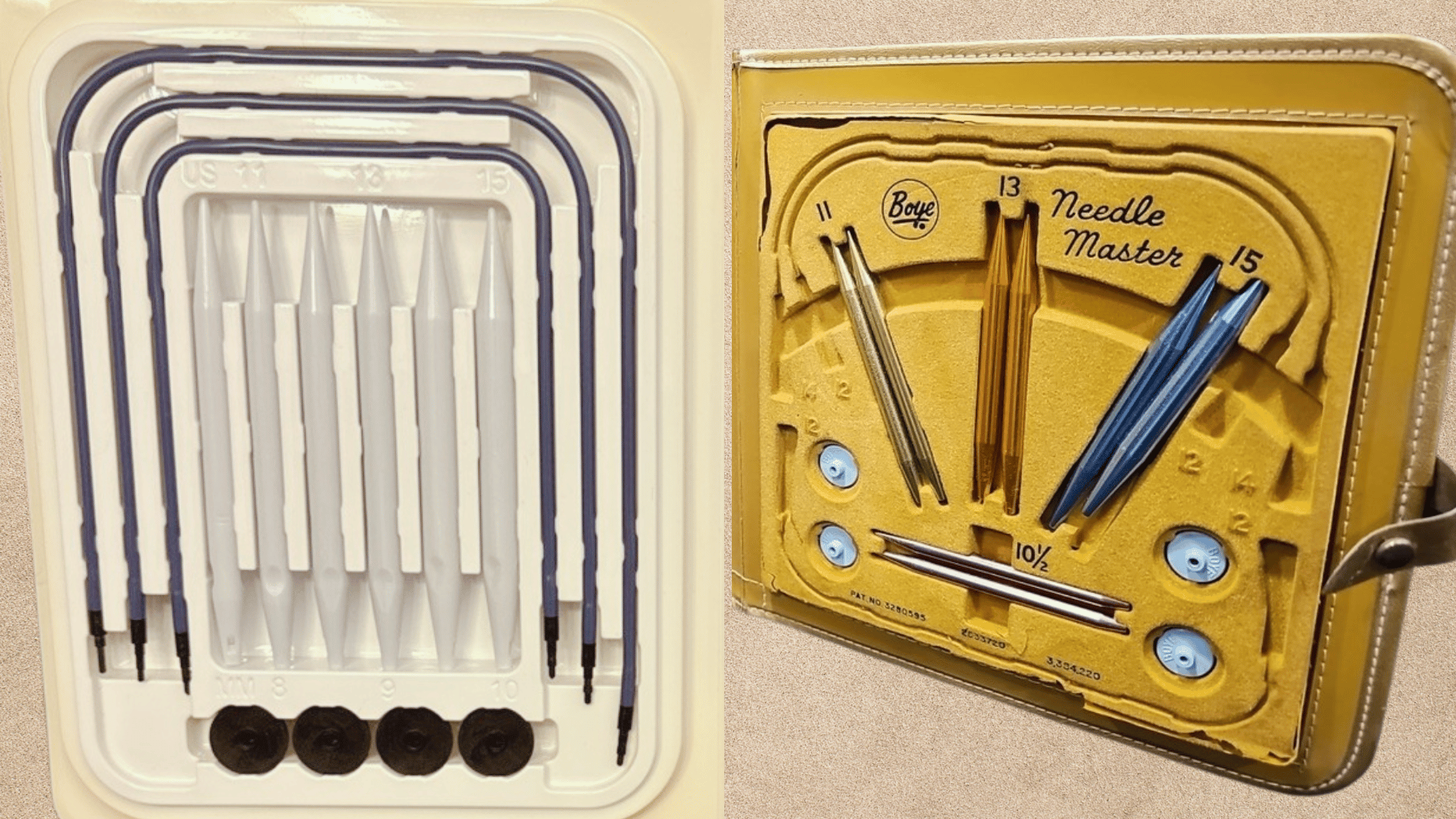
Case in point: my mother’s old Boye needles. They hold exactly zero sentimental value for me — and honestly, she didn’t like them either. I’m not entirely sure why we’ve kept them all these years.
From Clunky to Revolutionary: The Rise of Interchangeables
The biggest leap forward in knitting tools has been the development of interchangeable needle systems. Some of you may remember the old Boye Needlemaster sets — and I doubt those memories are fond. The joins were clunky, the cords stiff, and the overall experience… frustrating, at best. Let’s just say modern interchangeable needles are a completely different world.
I still remember when Denise Interchangeable Needle Sets were reintroduced and became the must-have item of the time. However, as circular needle technology continued to evolve, their popularity waned.
Compared to what’s available today, those early interchangeable sets simply don’t measure up. Modern systems are smoother, more secure, and far more thoughtfully engineered. It’s an entirely different ballgame.
One of the biggest shifts? You no longer have to commit to a full set. Today’s knitters can build their own system — selecting individual tips and cords to suit their preferences and projects.
Of course, that freedom comes with a downside: compatibility. Navigating the different options and compatibility among tips, cords, and brands can be terribly confusing.
The Three Main Interchangeable Systems
Currently, there are three primary systems on the market: Addi, ChiaoGoo, and a third category I’ll refer to as “pretty much everyone else.”
Let’s go over how these tips and cables pair up, and enhance your Interchangeable needle IQ!
Closed Systems vs. Mix-and-Match Systems
Both Addi and ChiaoGoo operate as closed systems. That means their tips and cords are designed to work exclusively within their own brand.
Then there’s what I call the “everyone else” category. Within this group, most tips and cords are interchangeable. You can mix brands and build a system that works for you without compatibility issues. However, those parts still won’t connect with Addi or ChiaoGoo — and Addi and ChiaoGoo don’t connect to each other either.
So let’s break down how these tips and cables pair up — and enhance your Interchangeable needle IQ!
Understanding the “Everyone Else” System
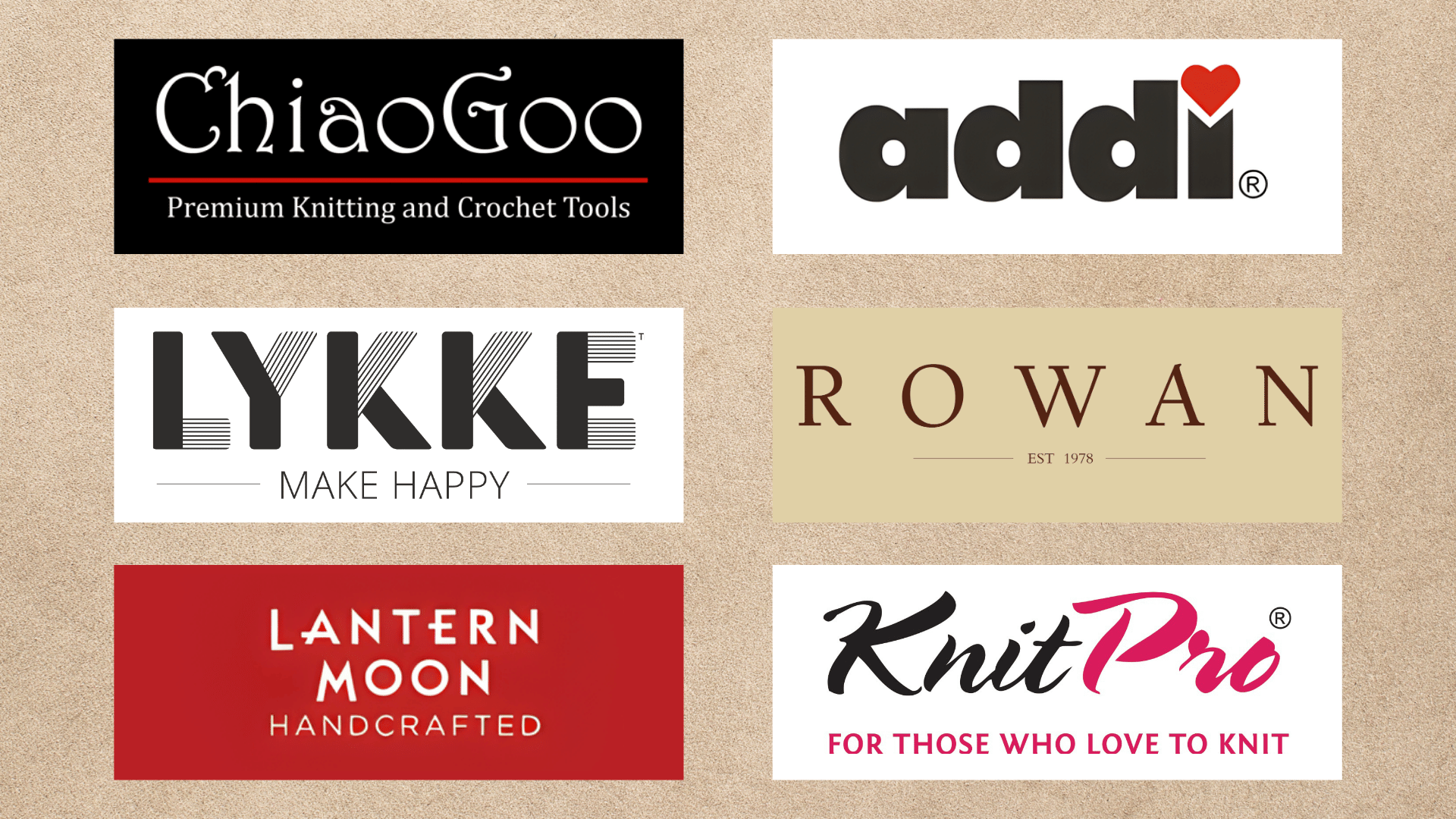
Within the “everyone else” system — brands like Lykke, Lantern Moon, Rowan, and KnitPro (formerly Knitter's Pride) — the structure is relatively straightforward.
Tip Lengths: Long vs. Short
Needle tips are available in a full range of sizes and typically come in two lengths: long and short.
Cables are offered in seven standard lengths: 16", 20", 24", 32", 40", 47", and 60".
Here’s where it starts to matter.
Long tips are designed to create circular needles that measure 24" or longer. They cannot be used with standard 16" or 20" cables — the tips themselves are simply too long. (If you’ve ever tried, you already know why.)
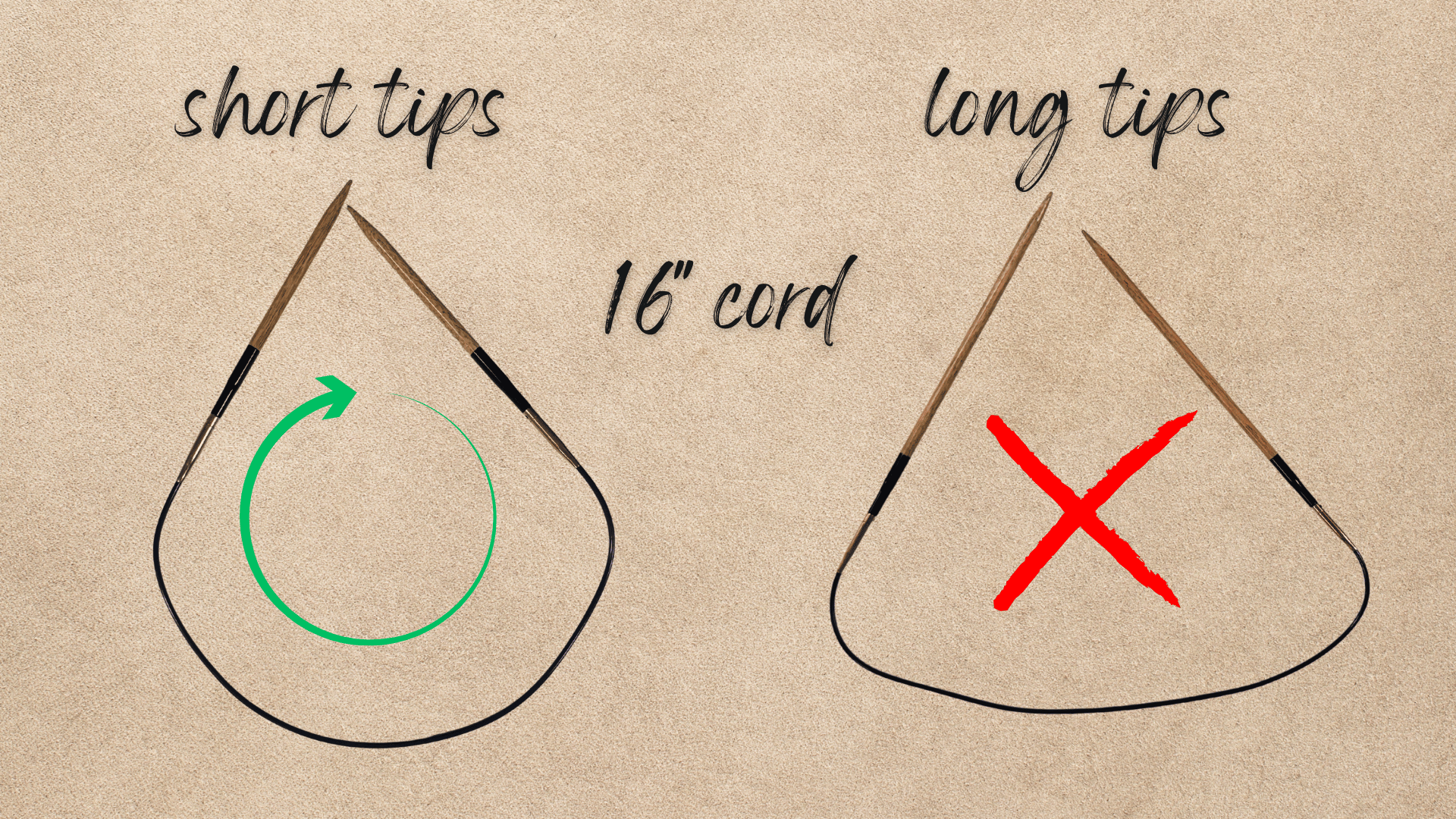
For smaller circumferences, you’ll need short tips. While short tips can technically be paired with any cable length, comfort is really the deciding factor. Some knitters prefer long tips for bigger projects because they simply feel better in the hands and give you a little more to hold onto. Others use short tips for absolutely everything and never think twice about it.
At the end of the day, it’s all about what feels right to you.
Cable Lengths: What the Numbers Actually Mean
Now for the part that causes the most confusion:
The cable length listed on the package refers to the finished tip-to-tip length — but only when the appropriate tip length is used.
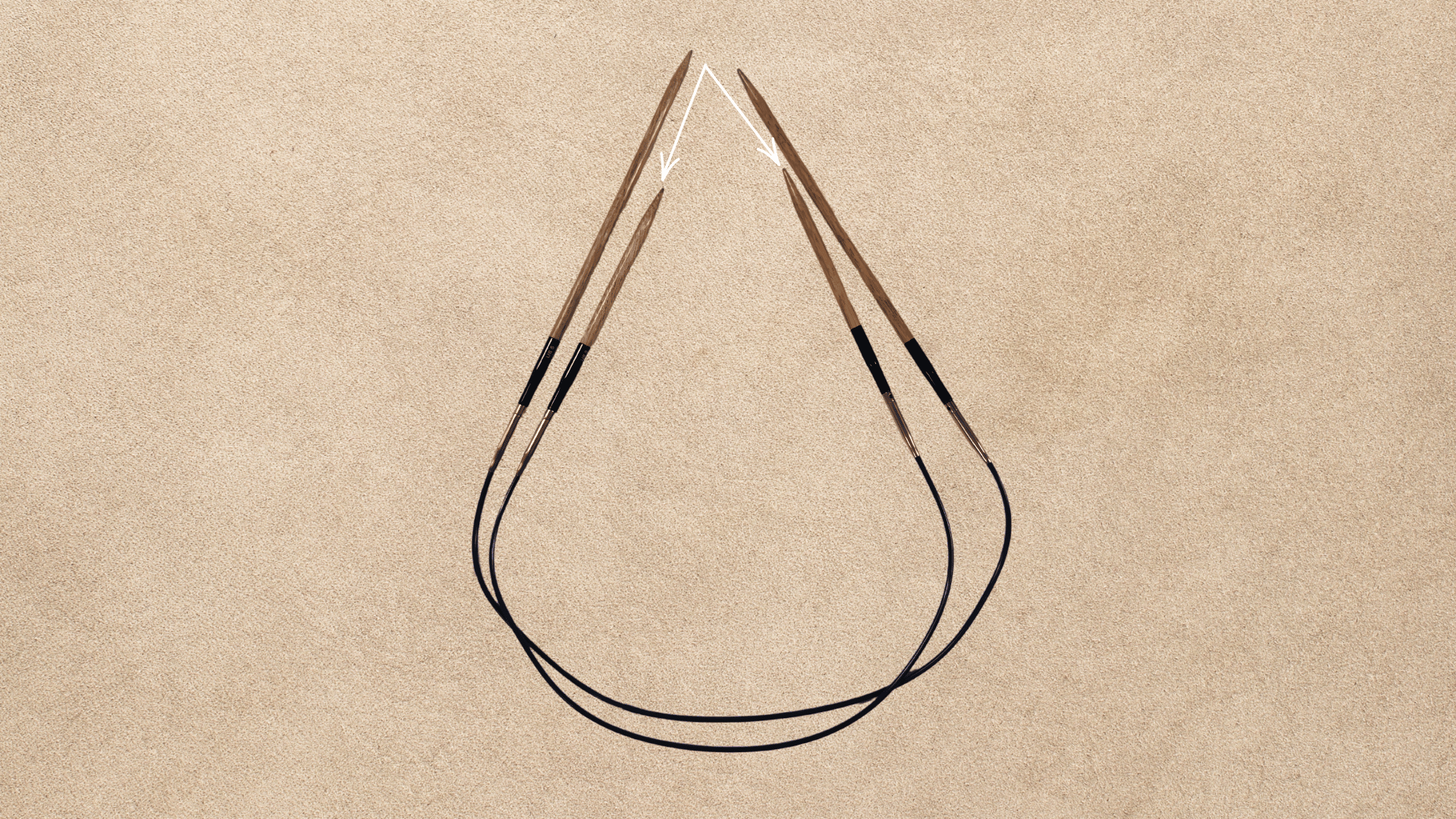
For example, a 24" cable assumes you’re attaching long tips (typically 5"). If you attach 3.5–4" short tips instead, your finished needle will measure shorter than 24".
In other words, the stated cable length is typically based on:
- Short tips for 16" and 20"
- Long tips for 24"–60"
Once you understand that, everything suddenly makes sense.
When Good Intentions Create More Confusion: Lykke’s Approach
When Lykke entered the market, they tried to solve the length discrepancy issue. They introduced 16", 20", and 24" cables designed specifically for their 3.5" short tips, and separate 20"–60" cables for their 5" long tips.
In theory? Brilliant.
In reality? We now have two different 20" and 24" cables — with only a tiny label indicating whether it’s meant for the 3.5" or 5" tips. The print is small, it’s easy to miss, and they get mixed up constantly.
Enter Lykke Flight (And a Little Chaos)
Then Lykke launched their new Lykke Flight Stainless Steel Needles — which are phenomenal, by the way. The stainless steel construction allowed them to introduce smaller needle sizes that weren’t possible with wood tips.
Fantastic for knitters. Slightly chaotic for us.
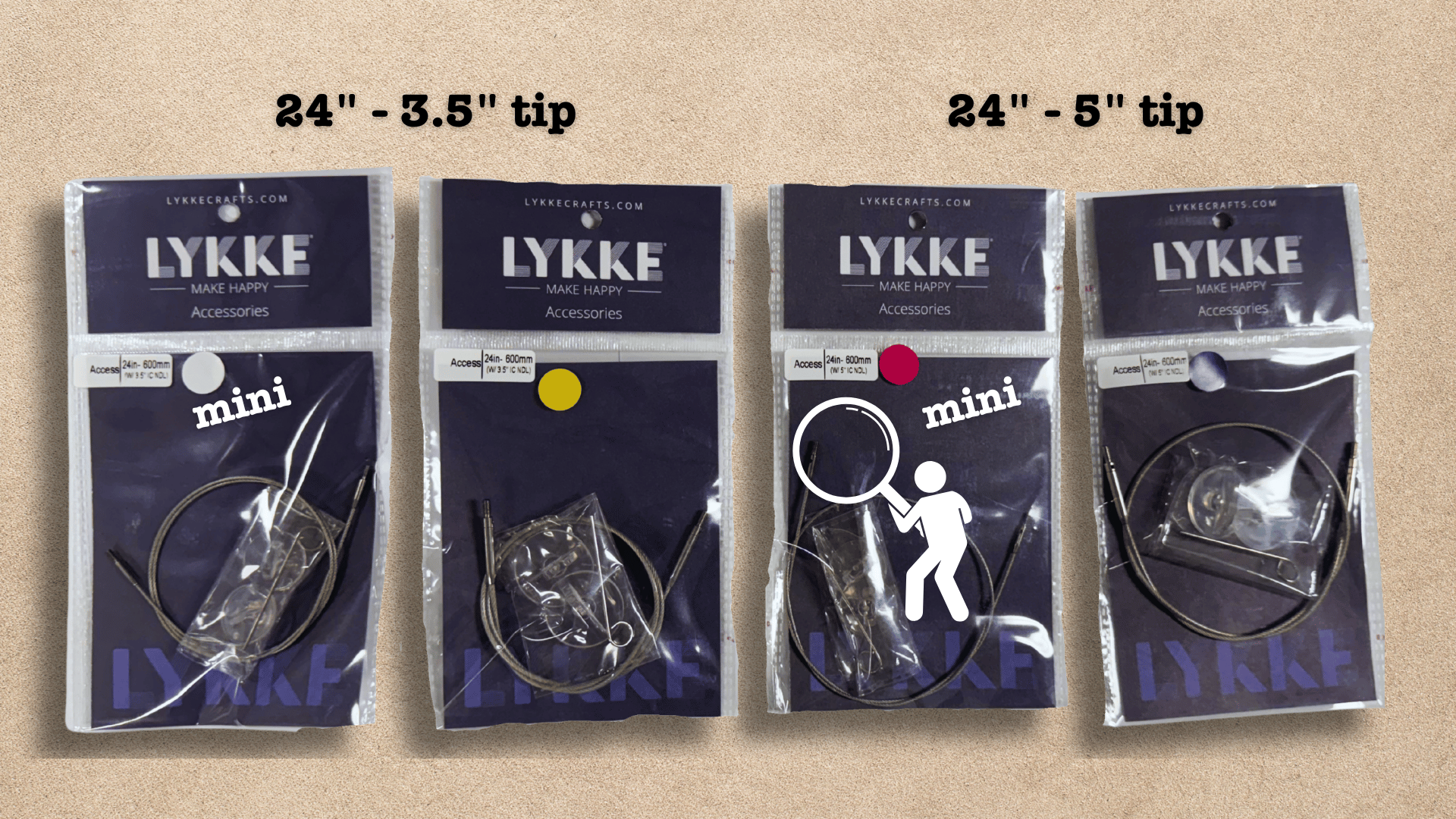
These smaller tips require a smaller cable connection, but the packaging doesn’t clearly indicate which cable pairs with which tip size. Yes, you can squint through the package and see that one connector looks smaller… but try doing that on a busy Saturday without your glasses. And remember — we still have duplicate 20" and 24" cables for short and long tips floating around.
Mistakes were bound to happen. And the last thing we ever want to do is send you home with the wrong cable.
So I had a small moment of brilliance. We instituted a color-dot system.
The Color-Dot System (Our Sanity Saver)
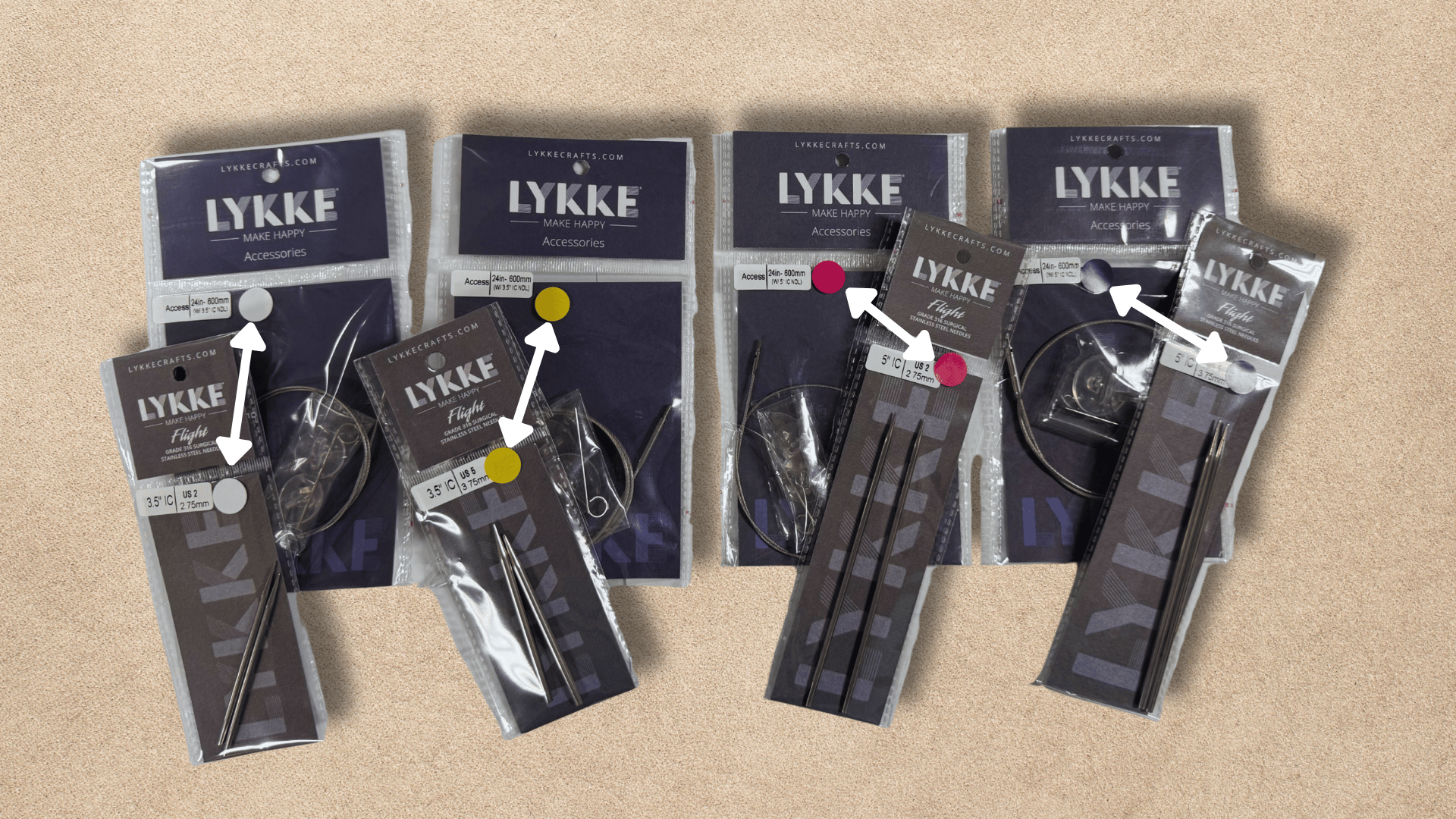
Now it’s as simple as matching the dots — think Garanimals, but for knitting needles. If the dots match, the tips and cable match. No squinting. No guesswork. So whether we’re helping you at the counter or you’re grabbing what you need on your own, just match the dots — and you’re good to go.
ChiaoGoo’s Different Approach to Cable Length
ChiaoGoo took a different approach to the cable-length dilemma.
They recognized that listing a cable by its finished tip-to-tip length can get messy when tips come in multiple sizes. So instead, they label their cables by the cable’s actual length — and let you do the math.
- A 14" cable is 14" long.
- Add two 5" tips, and you have a 24" circular.
- Add two 4" tips, and you get a 22" circular.
It’s not complicated — but it does require you to stop and think for a moment.
Mini, Small, and Large: Why Join Size Matters
Now, here’s another important factor: a single cable join can’t accommodate every needle size. That’s why most interchangeable systems begin around size 3 or 4 and top out around size 13 or 15. With wood needles in particular, anything smaller than a size 3 becomes structurally fragile — they simply aren’t strong enough.
ChiaoGoo solves the size-range challenge by offering three cable categories based on connector diameter: Mini, Small, and Large. Their needle tips are categorized the same way — Mini, Small, and Large — to match the cables.
Adapters do exist, but in general, it’s best to pair the cable and tip within the same category.
So yes — ChiaoGoo has its own version of “read the fine print.” Instead of watching cable length labels, you’re looking for the tiny M, S, or L on the packaging to make sure everything matches.
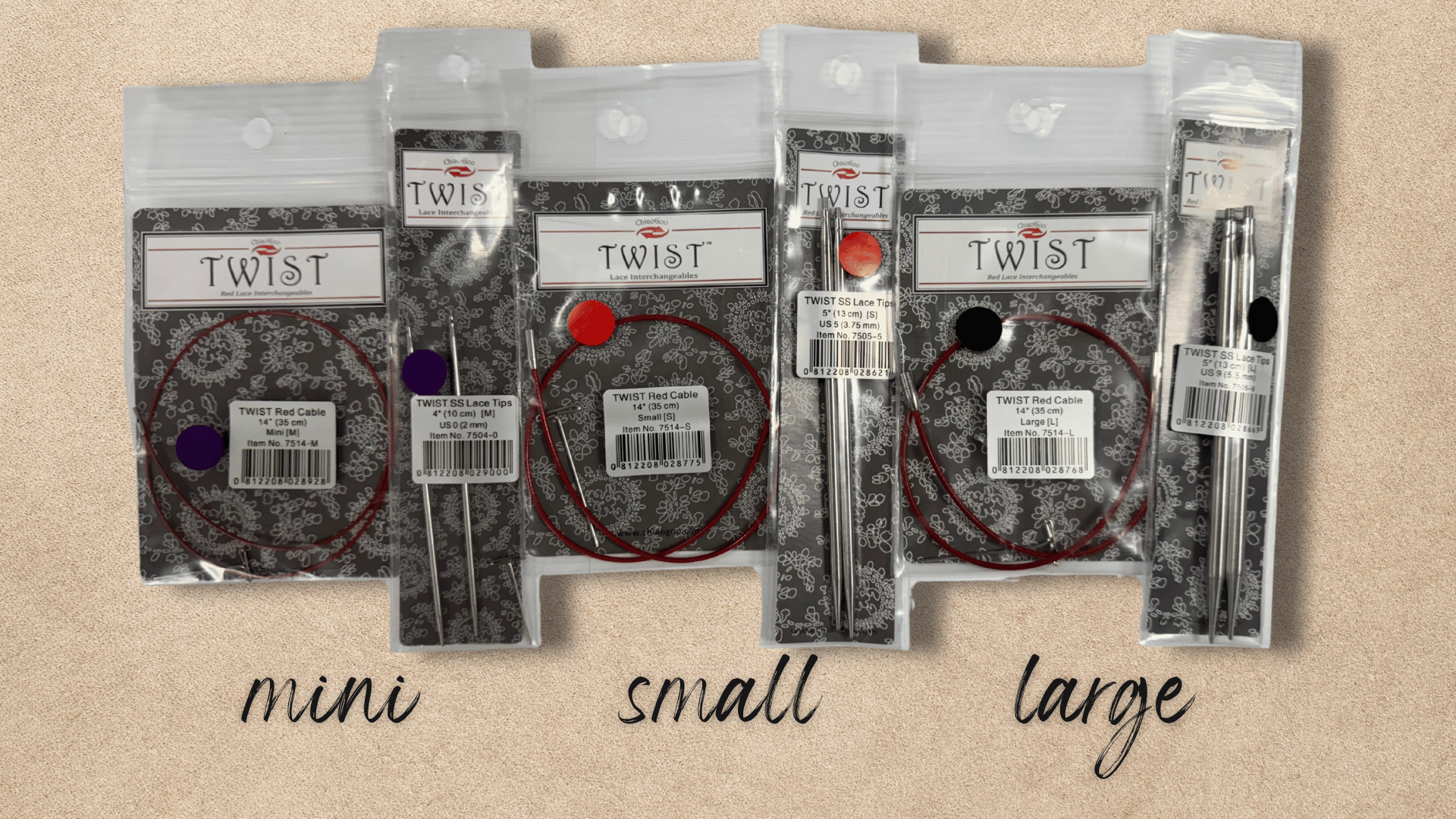
And yes… I added dots to these, too. I’m not entirely sure why I didn’t think of that years ago.
Why We No Longer Carry Addi Interchangeable Needles
As for Addi, we previously carried their interchangeable system. But once ChiaoGoo’s precision-sharp tips hit the market, demand shifted. Even though Addi has upped their game, we simply don’t have the shelf space — or the mental bandwidth — to juggle a third, entirely different system.
Two Questions We Get All the Time
The two most common questions we get about interchangeable needles are:
-
- How do I keep them from coming apart?
- Should I buy a full set?
Why Do My Needles Keep Coming Apart?
If your tips keep coming detached from the cord, they aren’t tightened enough. Use the small tightening key that comes with the cables, and make sure you’re holding the needle tip firmly while you turn. A rubber grip (like the kind you use to open stubborn jars) makes a huge difference. Once they’re properly secured, they should stay put.
Should I Buy a Complete Set?
As for investing in a complete set, my advice is simple: don’t rush it. Start by trying individual tips to figure out what you actually love. There are real differences to consider — most notably wood versus metal.
If you’re a newer knitter and still working on keeping stitches from sliding off, ultra-slick stainless steel may not be your best friend just yet. If you love speed and want your stitches to glide, stainless steel could be exactly what you’re looking for.
Wood tips are wonderful for slippery yarns because they offer a bit more grip. Metal tips shine when working with yarns that tend to drag or feel sticky. Personally, I think you need both!
Sets vs. Buying à La Carte
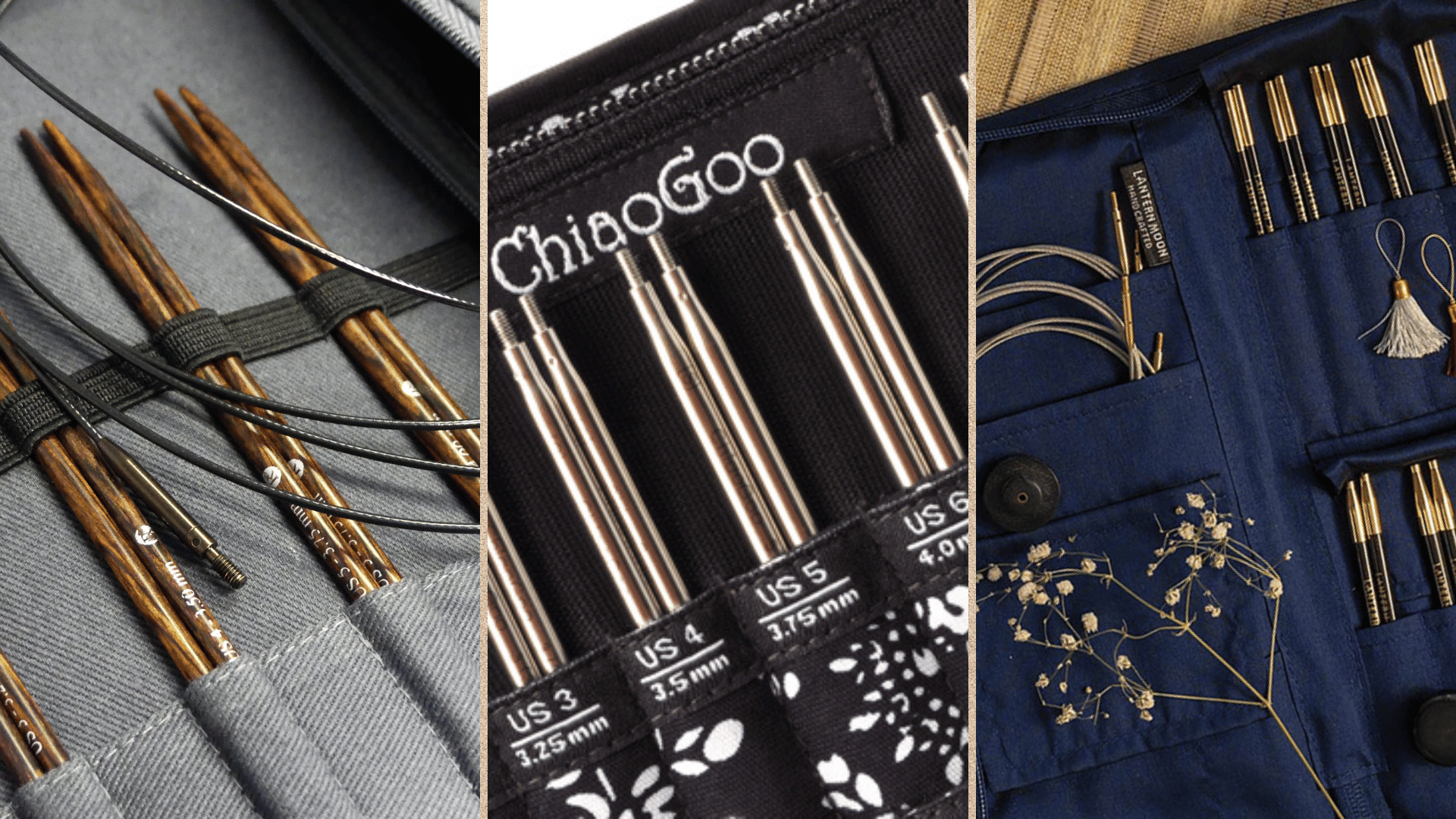
While I would love to tell you there’s a huge financial advantage to buying a complete set, the truth is this: purchasing each tip and cable individually often costs less than buying the full set.
What you do get with a set are the extras — tools, connectors, stoppers — and, most importantly, a proper case. And unless you plan to store your needles in a Ziplock bag (please don’t), that case alone can make the set worthwhile.
ChiaoGoo sets even include their adorable heart-shaped gripper for tightening tips — which is both functional and charming.
Material Matters: Stainless, Bamboo, Forte & Flight
ChiaoGoo sets are available in stainless steel and bamboo, as well as their newer ChiaoGoo Forte Interchangeable Needles line, which combines stainless steel tips with carbon fiber shafts for the smaller sizes and ebony wood for the larger ones. All ChiaoGoo tips and cords are interchangeable across their different tip materials, as long as you stay within the proper Mini, Small, or Large join size.
Until the recent release of Lykke Flight Stainless Steel Needles, most of the “everyone else” sets were limited to wood tips. Now, Flight offers a stainless steel option within that ecosystem, giving knitters more flexibility between wood and metal — with one small caveat: the Flight Mini sizes require their own smaller cable.
Clear as Mud? We’ve Got You.
If all of this feels a little… clear as mud, I completely understand.
Interchangeable needles really are a game-changer once you find the system that feels right in your hands. And yes — there are a lot of moving parts. But that’s exactly why we’ve taken the time to sort through the confusion, test the options, and even invent our little color-dot sanity saver.
Ready to Find Your Perfect Setup?
If you’re ready to upgrade (or finally try interchangeables for the first time), you can shop our full selection of tips, cords, and sets on our website. And if you’re still not sure what you need? That’s what we’re here for. We love this stuff — and we’re always happy to help you build your perfect setup.
Leave a comment
Recent articles
View all
Rowan Flagship Store
Paka Washi