Alphabet Soup
Alphabet Soup: What Do Those Yarn Certifications Really Mean?
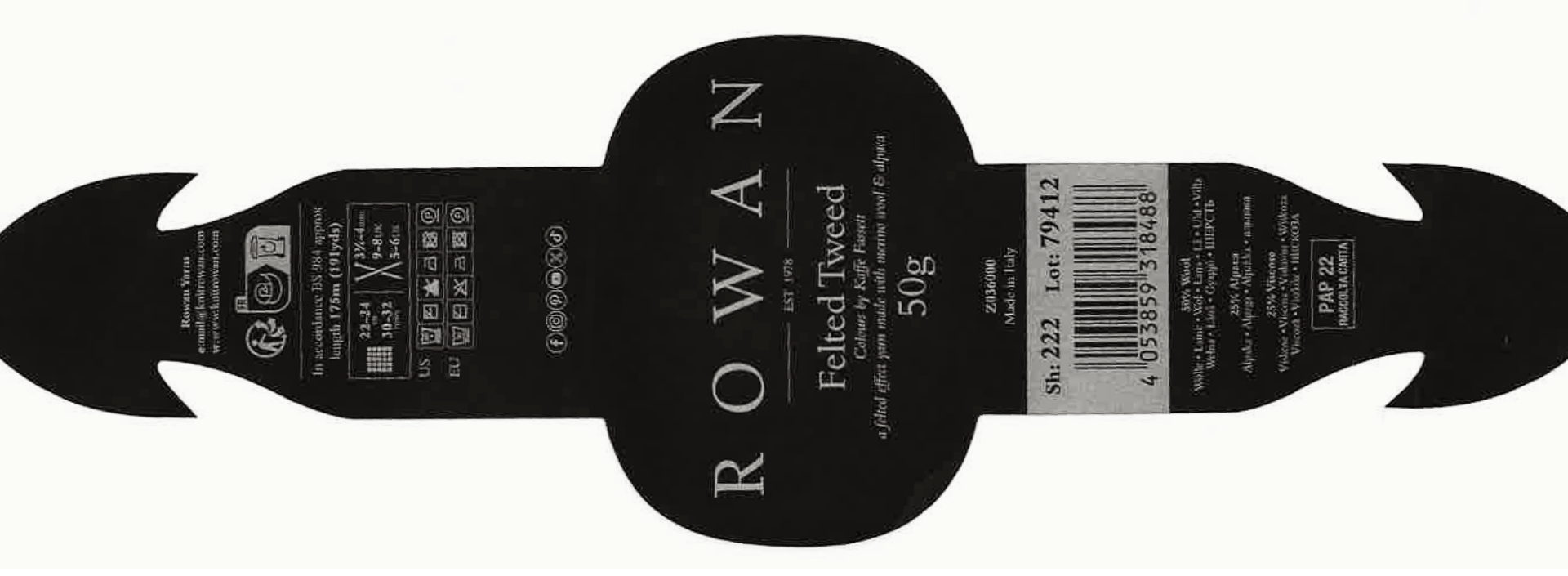
A yarn label contains plenty of essential information: fiber content, yardage, washing instructions, recommended gauge, needle or hook size, country of origin—and occasionally what feels like enough fine print to require a magnifying glass.
Much of that information is required by the countries in which the yarn is sold. Because many yarn companies distribute their products internationally, a single label may need to satisfy regulations in several different markets.
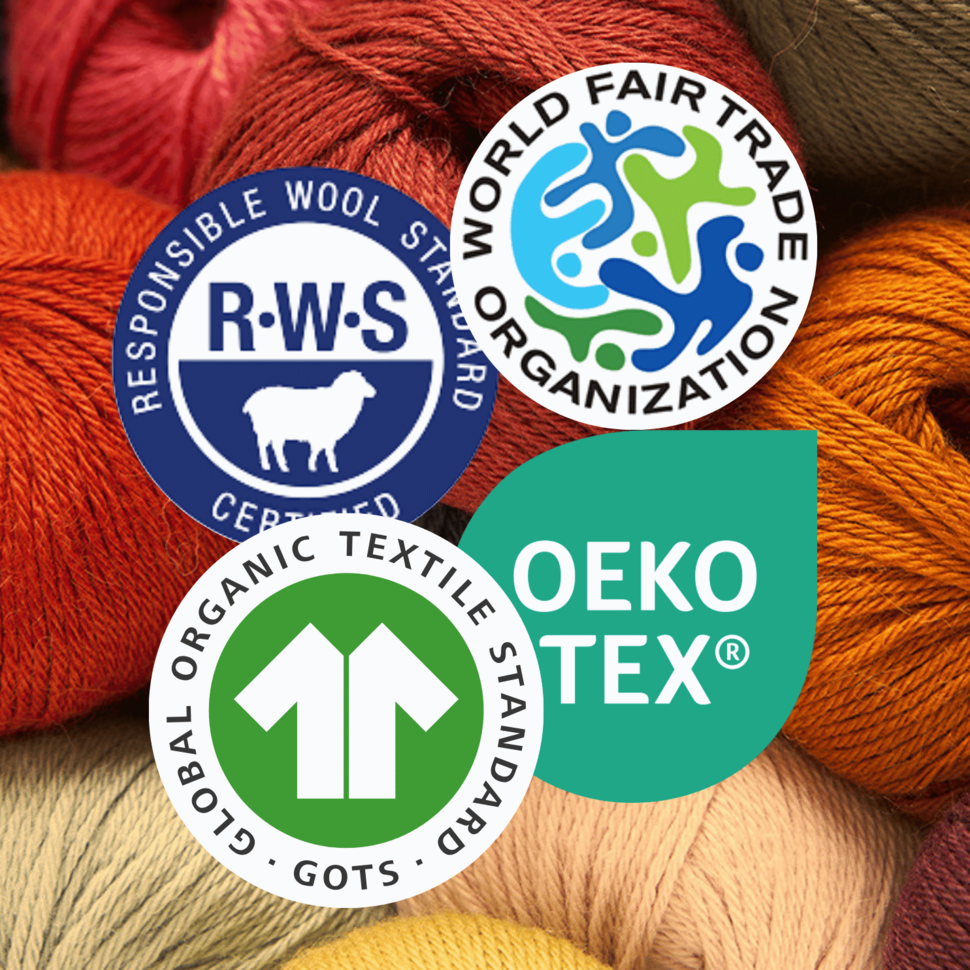
Then there are the logos and acronyms: OEKO-TEX®, RWS, GOTS, RCS, GRS and WFTO. Rearrange a couple of letters in that last one, and you have a fairly accurate description of the confusion all this alphabet soup can create.
So, what do those symbols actually tell you?
OEKO-TEX® STANDARD 100
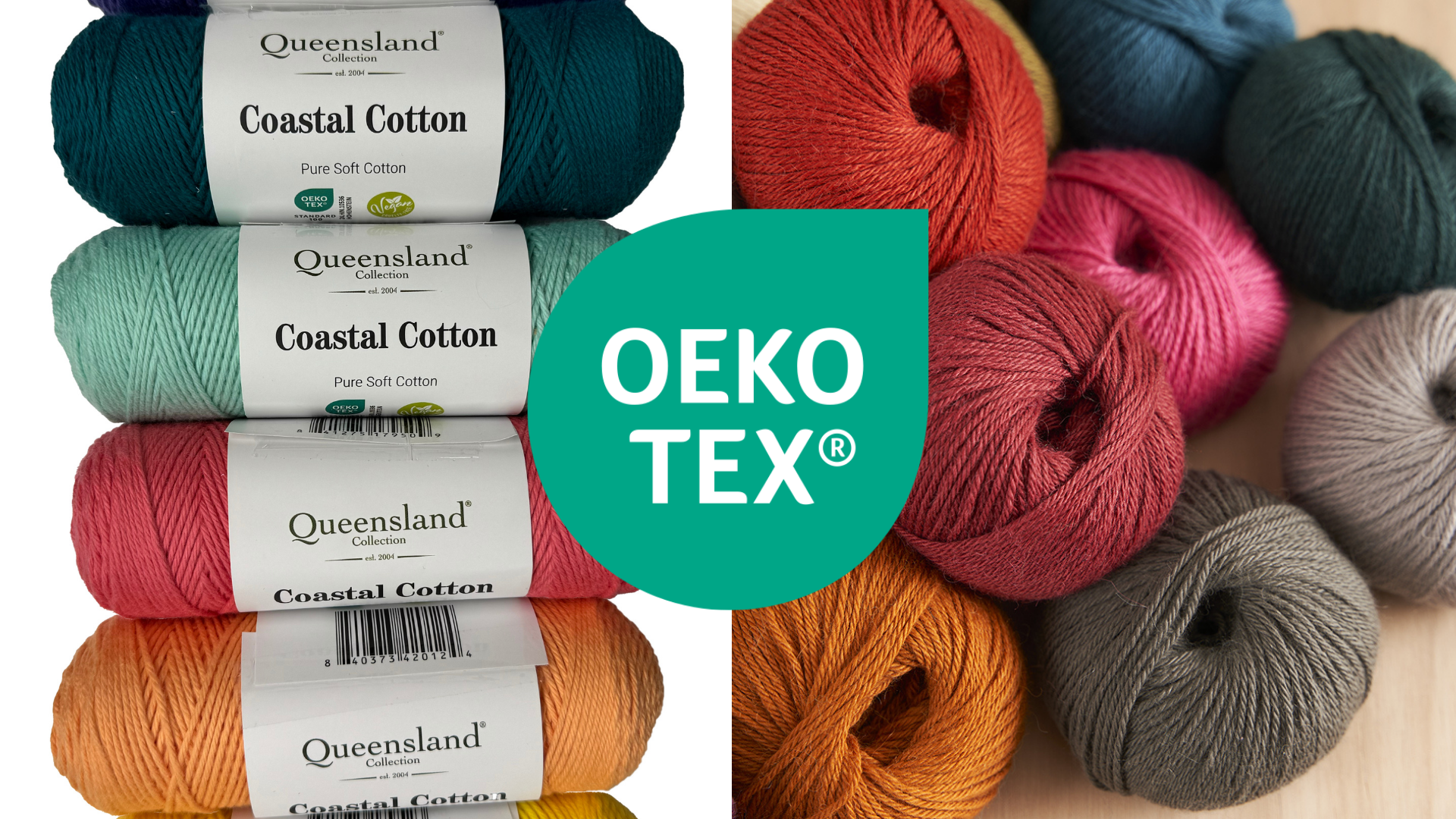
OEKO-TEX® offers several textile certifications, but the one most commonly found on yarn labels is STANDARD 100 by OEKO-TEX®.
This certification means the textile has been independently tested for substances that may be harmful to human health. The testing covers more than 1,000 regulated and unregulated substances, with stricter limits applied to products intended for babies or prolonged contact with the skin.
STANDARD 100 can apply to raw materials, yarns, fabrics and finished products. Every component of a certified item must meet the applicable requirements.
What it does not do is evaluate the entire environmental or social history of the product. It tells you that the certified textile has passed extensive safety testing—not necessarily how the fiber was raised, how much water was used, how workers were treated or how the land was managed.
Among the yarns you may see carrying this certification are Queensland Coastal Cotton and Rowan Pure Alpaca.
Learn more about OEKO-TEX® STANDARD 100
RWS: Responsible Wool Standard
The Responsible Wool Standard, or RWS, focuses specifically on wool.
Created by Textile Exchange, this voluntary global standard addresses the welfare of sheep, the management of the land on which they graze and the working conditions of the people involved. Certified wool must also remain traceable through the supply chain, from the farm to the final business-to-business transaction.
RWS requirements include animal-welfare protections, responsible land-management practices and a prohibition against mulesing. Farms and other participating businesses are audited by independent certification bodies.
That traceability is important. An RWS label does not merely indicate that a company says it buys responsible wool; it means the certified fiber has been documented throughout the production chain.
Learn more about the Responsible Wool Standard
RCS and GRS: Recycled Materials
Textile Exchange also administers two standards frequently associated with recycled fibers:
- RCS: Recycled Claim Standard
- GRS: Global Recycled Standard
Both provide third-party verification of recycled materials and track those materials through the supply chain.
The RCS primarily verifies that the claimed recycled content is actually present. The GRS goes further, adding requirements related to social and environmental practices during processing, along with restrictions on potentially harmful chemicals.
In other words, RCS answers the question, “Is this material genuinely recycled and traceable?” GRS addresses that question while also examining more of the way the certified product is processed.
Queensland Dungarees Paint carries RCS certification, while Sirdar Loveful Tweed and Loveful Acrylic carry GRS certification.
GOTS: Global Organic Textile Standard
GOTS, the Global Organic Textile Standard, is one of the most comprehensive and widely recognized certifications for textiles made with organic fibers.
Rather than looking only at the raw fiber, GOTS covers processing, manufacturing, packaging, labeling, trading and distribution. It includes environmental requirements, restrictions on chemical inputs and social criteria for workers throughout the certified portion of the supply chain.
GOTS offers two label grades:
- Organic: At least 95% certified organic fibers
- Made with Organic Materials: At least 70% certified organic fibers
The remaining fiber content must also comply with GOTS requirements. The standard can apply to both plant-based and animal-based natural fibers, provided those fibers enter the production chain with an accepted organic certification.
This is an important distinction: GOTS is not simply a claim that a fiber was organically grown. It verifies the processing and handling of a textile made with certified organic fiber.
WFTO: World Fair Trade Organization
The World Fair Trade Organization takes a different approach. Its Guarantee System evaluates an entire enterprise rather than certifying one particular fiber or product.
A Guaranteed Fair Trade Enterprise must demonstrate that its business practices uphold the WFTO’s ten Fair Trade Principles. These address such matters as:
- Opportunities for economically marginalized producers
- Transparency and accountability
- Fair trading practices and fair payment
- No child labor or forced labor
- Nondiscrimination and gender equity
- Safe and healthy working conditions
- Skills and capacity building
- Promotion of Fair Trade
- Climate action and environmental protection
This is a rigorous, ongoing process involving self-assessment, independent auditing, monitoring and continued improvement.
Manos del Uruguay has been a member of the WFTO since 2009. Its membership applies to the cooperative as an enterprise and reflects how the organization operates—not merely the contents of an individual skein of yarn.
Learn more about the WFTO Guarantee System
What About “Vegan,” “Organic” and “Mulesing-Free”?
Not every statement on a yarn label represents an independent certification.
Vegan
The word vegan may simply be a manufacturer’s claim unless it appears with a recognized third-party certification mark.Legitimate certifications do exist, including The Vegan Society’s Vegan Trademark, but a generic vegan symbol created by a manufacturer does not necessarily represent independent verification.
With a plant-based yarn such as cotton, linen or hemp, the absence of animal fiber may seem fairly obvious. However, a thorough vegan certification can also consider dyes, processing agents and other ingredients that may not appear in the basic fiber-content listing.
Certified Organic
If a label says certified organic, look for the name or logo of the certifying organization and, when provided, a certification or license number.
“Organic fiber” and “GOTS-certified textile” are not interchangeable descriptions. The first generally refers to how the raw material was raised or grown. The second indicates that the textile’s later processing and handling also met GOTS requirements.
A specific certification symbol gives you considerably more information than the word organic standing alone.
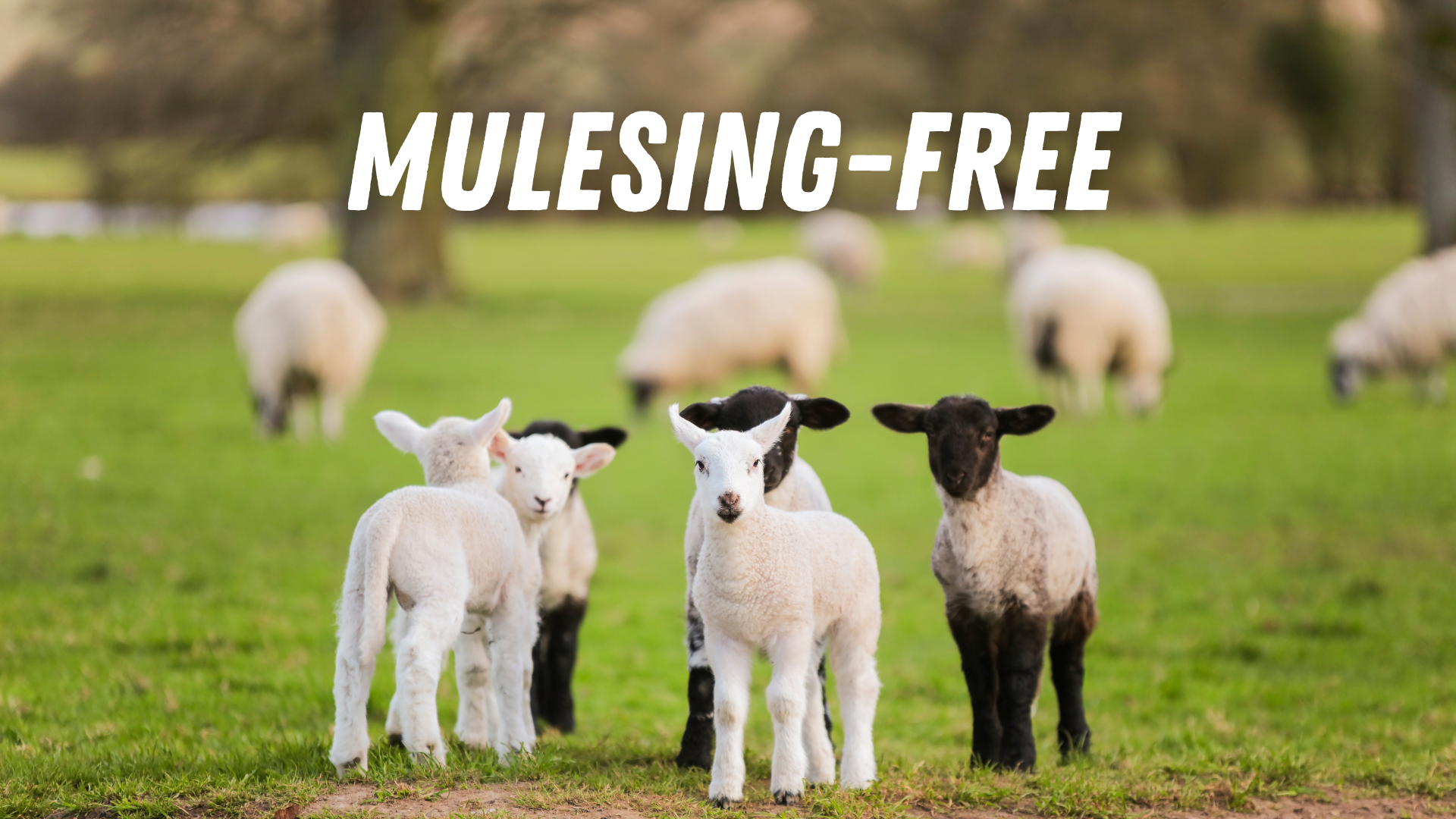
Mulesing-Free
The phrase mulesing-free may also be a manufacturer or supplier claim rather than a stand-alone certification. Some broader wool standards provide stronger verification; RWS, for example, prohibits mulesing and requires traceability through the certified supply chain.
This is a complicated animal-welfare issue influenced by geography, climate, farming practices and the risk of flystrike. A yarn label cannot explain all that nuance, but a recognized standard can tell you whether the claim has been independently verified.
What a Missing Certification Does—and Does Not—Mean
A yarn without one of these symbols is not automatically unsafe, environmentally irresponsible or produced under poor working conditions.
Certification can be expensive and administratively demanding, particularly for smaller farms, mills and yarn companies. A producer may follow thoughtful environmental, labor or animal-welfare practices without having completed a formal certification process.
Conversely, one certification does not answer every possible question about a yarn. Each standard has a defined scope:
- OEKO-TEX® STANDARD 100 focuses on testing textiles for harmful substances.
- RWS addresses wool, sheep welfare, land management and traceability.
- RCS and GRS verify recycled materials, with GRS adding processing requirements.
- GOTS covers textiles made with certified organic fibers and their processing.
- WFTO evaluates the Fair Trade practices of an entire enterprise.
The symbols are useful—but only when you know what each one actually represents.
Making a More Informed Yarn Choice
Environmental responsibility, fair working conditions, animal welfare and supply-chain transparency matter to a growing number of knitters and crocheters. As yarns continue to be produced for an international marketplace, these certifications are likely to become increasingly familiar.
No single label can tell the complete story of a yarn, and no one certification encompasses every ethical or environmental consideration. These symbols do, however, provide a useful place to begin. Once you can translate the alphabet soup, that tiny yarn label becomes much more informative.
Interested in exploring some of these yarns for yourself?
SHOP OEKO-TEX® CERTIFIED YARNS
- Kelbourne Woolens Perennial
- Rowan Pure Alpaca
- Queensland Coastal Cotton
- Queensland Coastal Cotton Ocean Mist
SHOP RESPONSIBLY SOURCED WOOL/MOHAIR YARNS
- Wool and the Gang Take Care Mohair
SHOP CERTIFIED RECYCLED-FIBER YARNS
- Sirdar Loveful Recycled Acrylic
- Sirdar Loveful Recycled Tweed
- Sirdar Loveful Bio Blend
- Queensland Dungarees Paint
SHOP ORGANIC AND GOTS-CERTIFIED YARNS
- Juniper Moon Bud
- Juniper Moon Cotton+Merino
- DMC Eco Vita Wool Thread
SHOP WORLD FAIR TRADE ORGANIZATION MEMBERS
Leave a comment
Recent articles
View all
Koigu
Toyland